
A Hoosier's Guide to Post-Storm Roof Inspections: What to Do After the Hail Stops
Here in Indiana, we know that a sunny afternoon can turn into a serious storm in the blink of an eye. That familiar sound of hail hitting the roof is enough to make any homeowner anxious. Once the storm passes and the sun comes out, the big question is always, "Is my roof okay?" The uncertainty can be stressful, and it's often difficult to know what to do next. You're not just worried about leaks; you're concerned about the long-term integrity of your home, navigating potential insurance claims, and finding a trustworthy professional in the Indianapolis area to give you an honest assessment.
This guide is here to help. We'll walk you through the essential steps to take after a hailstorm, explain what professionals look for during a hail damage inspection, and clarify how to handle the process without the stress. Protecting your home starts with knowing what to look for and when to call for help.
Step 1: Safety First—Your Initial Ground-Level Check
The most important rule after any severe weather is to prioritize your safety. Never climb onto a potentially slippery and damaged roof to assess it yourself. You can learn a lot from a simple walk around your property from the safety of the ground.
Start by looking for obvious signs of impact. Check your property for the following clues that the hail was large and forceful enough to cause roof damage:
- Dented Gutters and Downspouts: Your home's aluminum gutters, downspouts, and fascia are often the first and most obvious indicators of hail impact.
- Damaged Siding and Windows: Look for cracks, chips, or holes in your siding and check window sills and frames for dents.
- Impact Marks on Decks or Fences: A wooden deck or fence can show divots or splintering from hail, giving you a good idea of its size and intensity.
- Damaged A/C Units or Mailboxes: Check your outdoor air conditioning unit for dents on the metal fins. Even your mailbox can be a good indicator.
If you see significant damage to these items, there's a strong possibility your roof has sustained damage as well, even if it's not visible from the ground. This is the point where a professional inspection becomes crucial to identify issues before they lead to leaks.
What We Look For: Identifying the Subtle Signs of Hail Damage
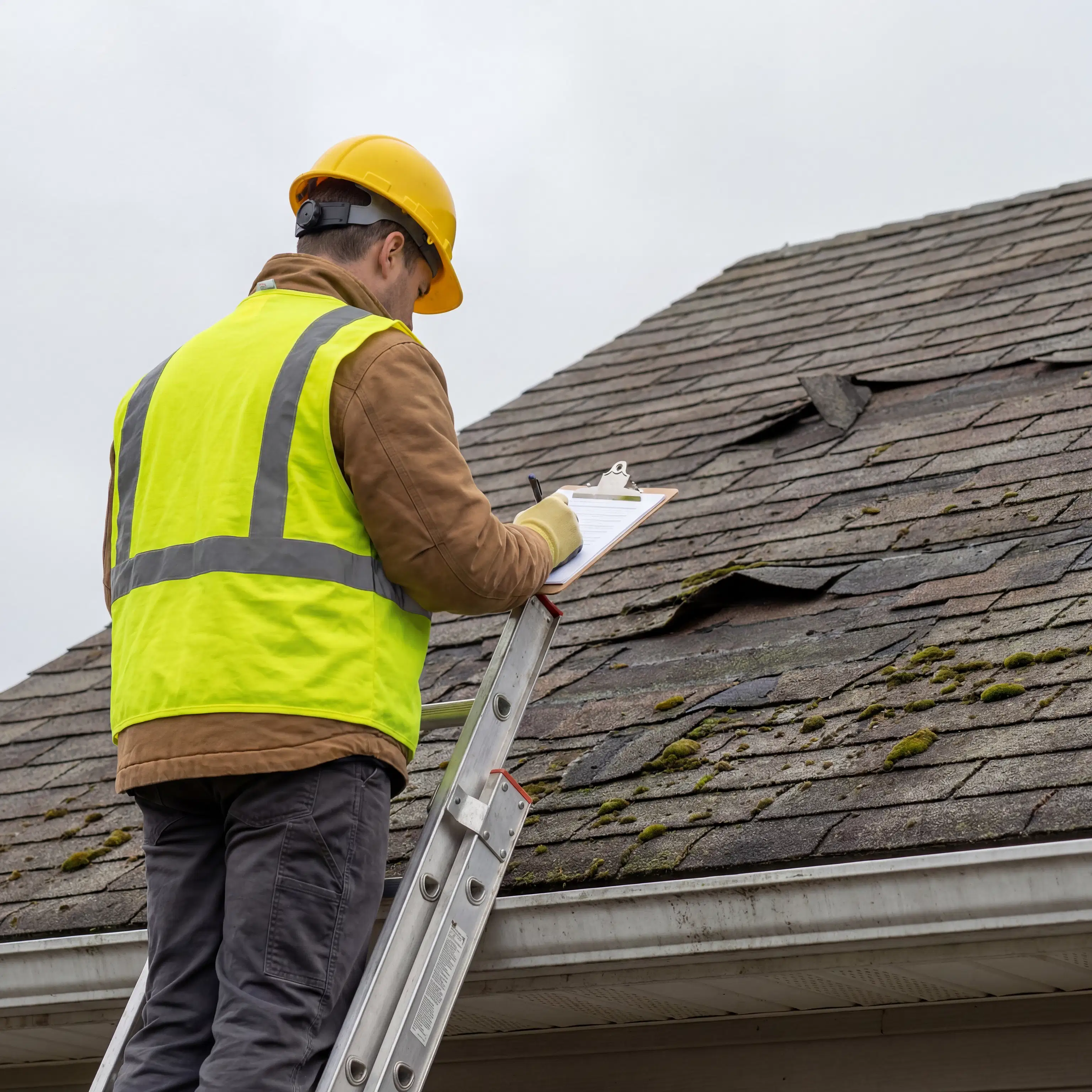
Hail damage on asphalt shingles is often subtle and requires a trained eye to spot. It's not always about finding huge holes or missing shingles. Most of the time, the damage compromises the shingle's ability to protect your home over the long term. When our experts conduct a storm damage inspection, they are looking for specific types of damage that an insurance adjuster will recognize.
Here are the key signs of hail damage on an asphalt shingle roof:
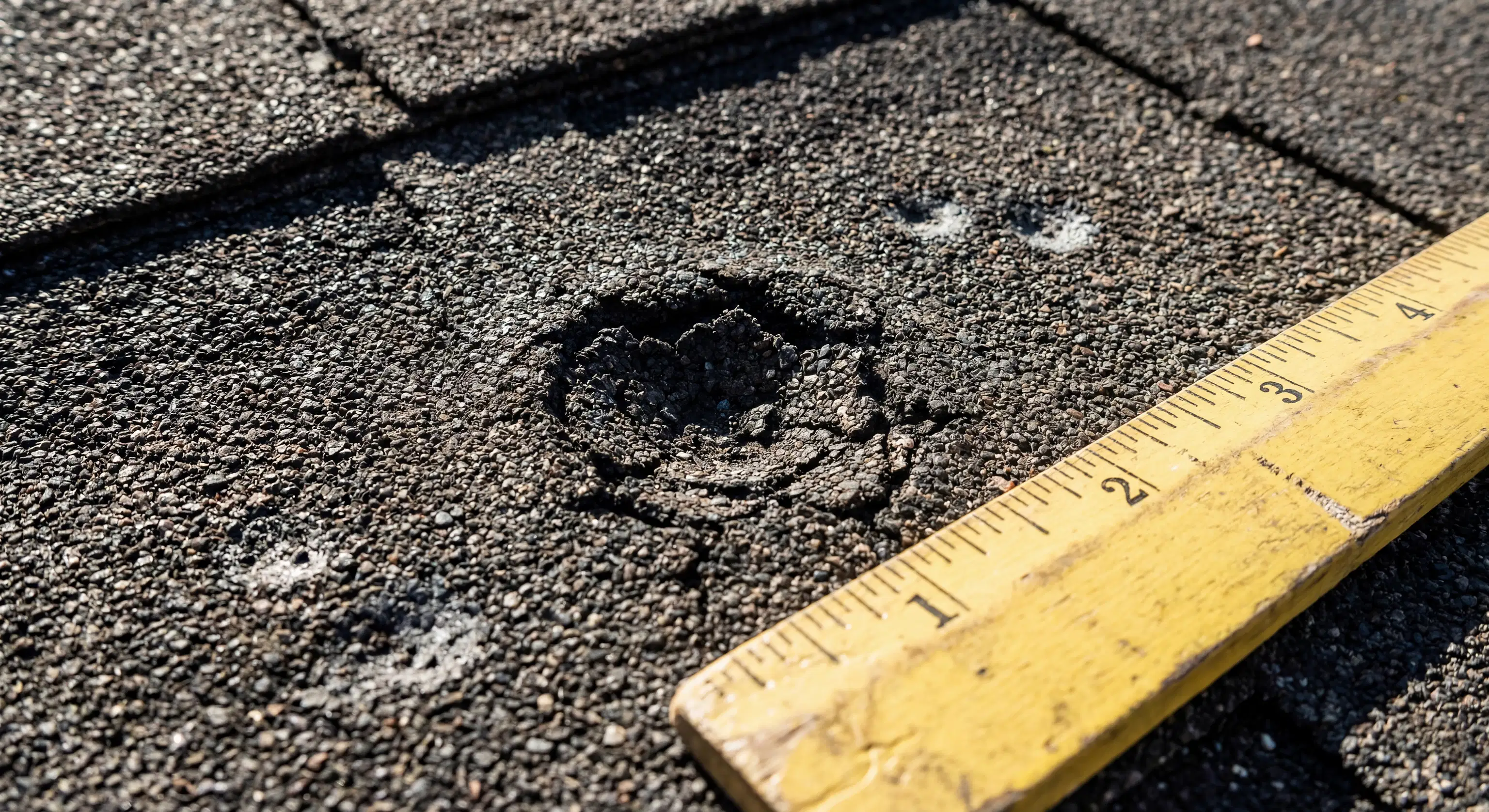
- Granule Loss: The most common sign is the loss of the protective granules on the shingle's surface. You might see areas that look 'bald' or notice an accumulation of black granules in your gutters. These granules are what protect the underlying asphalt from UV rays, and their loss can drastically shorten your roof's lifespan.
- Shingle Bruising: Hail can fracture the fiberglass mat underneath the shingle's surface without necessarily breaking through. To the touch, these spots will feel soft and spongy, like a bruised apple. Over time, these bruised areas will weaken and become entry points for water.
- Circular Cracking: A direct impact can cause the shingle to crack in a circular or semi-circular pattern around the point of impact. This is a clear sign of significant force and a definite problem area.
- Damage to Flashing and Vents: We meticulously inspect all metal components on your roof, including vents, flashing, and skylights, for dents and dings that confirm the presence of damaging hail.
The Professional Inspection and Insurance Claim Process
Feeling overwhelmed by the thought of dealing with insurance companies is completely normal. A reputable roofing partner can make the process significantly smoother. At No. 1 Exteriors, our goal is to provide you with a clear, honest assessment and support you every step of the way.
Our process is designed for your peace of mind. First, we conduct a thorough, free inspection of your entire home exterior. We document everything with high-resolution photos and detailed notes, creating a comprehensive report of our findings. This documentation is vital for a successful insurance claim.
If we find legitimate damage, we'll walk you through the report and recommend the next steps. Should you decide to file a claim, our insurance claim support service is here to help. We can meet with your insurance adjuster on-site to ensure they see the full scope of the damage we identified. This collaborative approach helps ensure that nothing is overlooked and that you receive fair consideration for all necessary repairs. Our expertise is in identifying storm damage, and we use it to advocate for you and your home.
Don't Wait for a Drip—Take Action After the Storm
The aftermath of a hailstorm can be a confusing time, but you don't have to navigate it alone. The key is to act promptly but not hastily. Start with a safe, ground-level assessment, and if you see any signs of damage, call a trusted professional. Ignoring potential hail damage can lead to slow leaks, wood rot, and much more significant problems down the road.
If you suspect your home in the Indy area has been affected by a recent storm, don't wait for a water stain to appear on your ceiling. Contact No. 1 Exteriors today to schedule a complimentary, no-obligation storm damage inspection. We're here to provide the clarity and expert help you need, from emergency repairs to comprehensive storm damage roof repair, ensuring your home is safe and secure for years to come.